
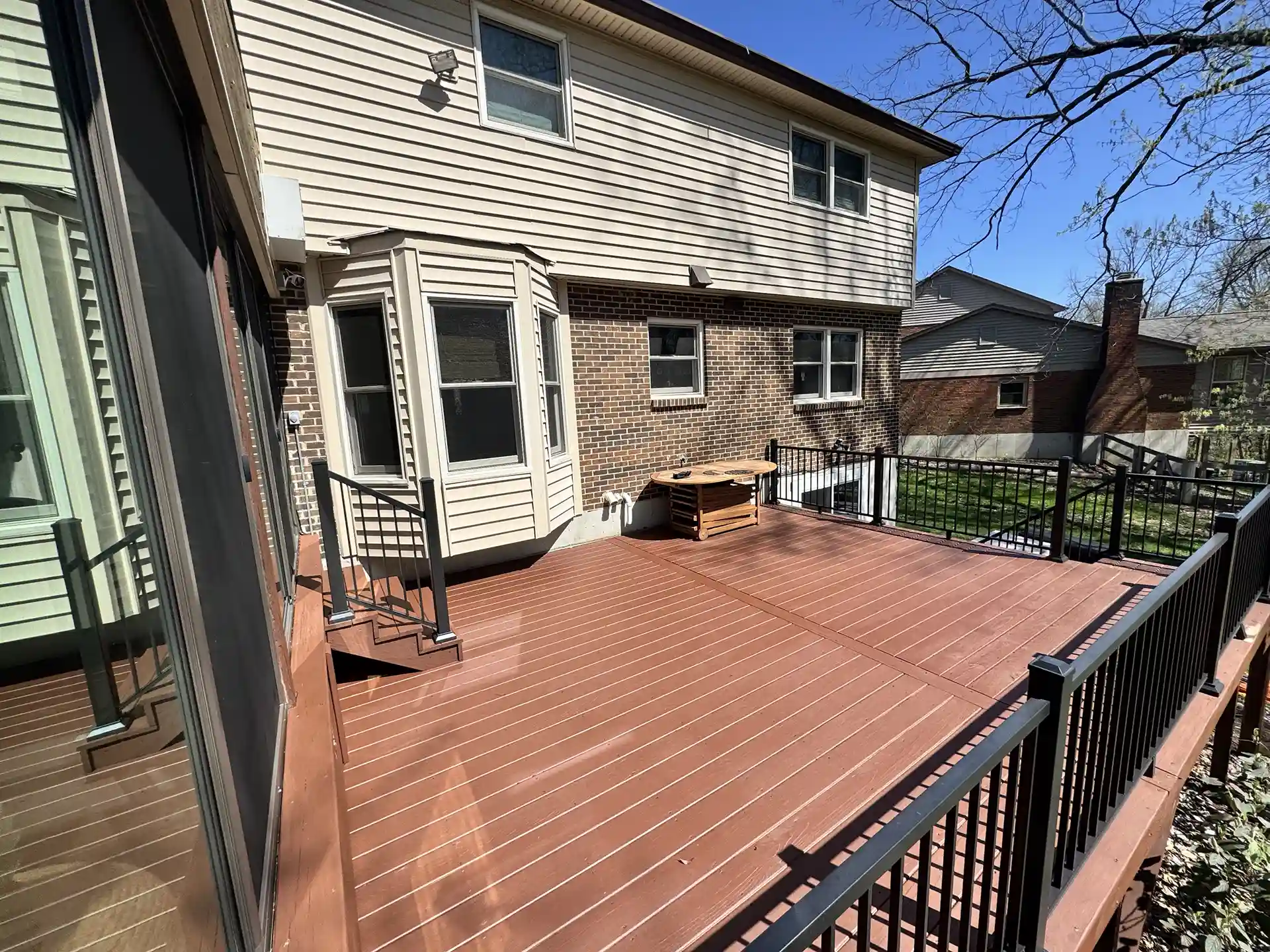
On Deck Services provides deck sealing, staining, cleaning, and paver restoration across the Cincinnati and Dayton regions. Nearly four decades of experience back every project. Each service solves a different problem, and matching the right one to your surface is what determines whether the result holds up. This post walks through what each service does, when it is the correct choice, and how Cincinnati’s climate shapes that decision.
The Four Services at a Glance
Deck cleaning, deck sealing, deck staining, and paver restoration are related but distinct services. Using the wrong one, or performing them out of order, leads to wasted money and a surface that fails ahead of schedule. Understanding the difference prevents mismatched expectations and helps you ask the right questions during an estimate.
- Deck Cleaning: Removes surface contaminants, organic growth, and oxidized wood fibers from the deck surface. It is the required first step before any coating is applied and the only service needed when the existing finish is still performing.
- Deck Sealing: Applies a penetrating protective coating that resists moisture and UV damage while preserving the wood’s natural appearance. It is the right choice when protection is the goal and color is not.
- Deck Staining: Applies a pigmented coating, ranging from transparent to solid, that adds color, UV protection, and a longer wear cycle than a clear sealer. Staining is appropriate when the existing finish has failed or the deck needs visible restoration.
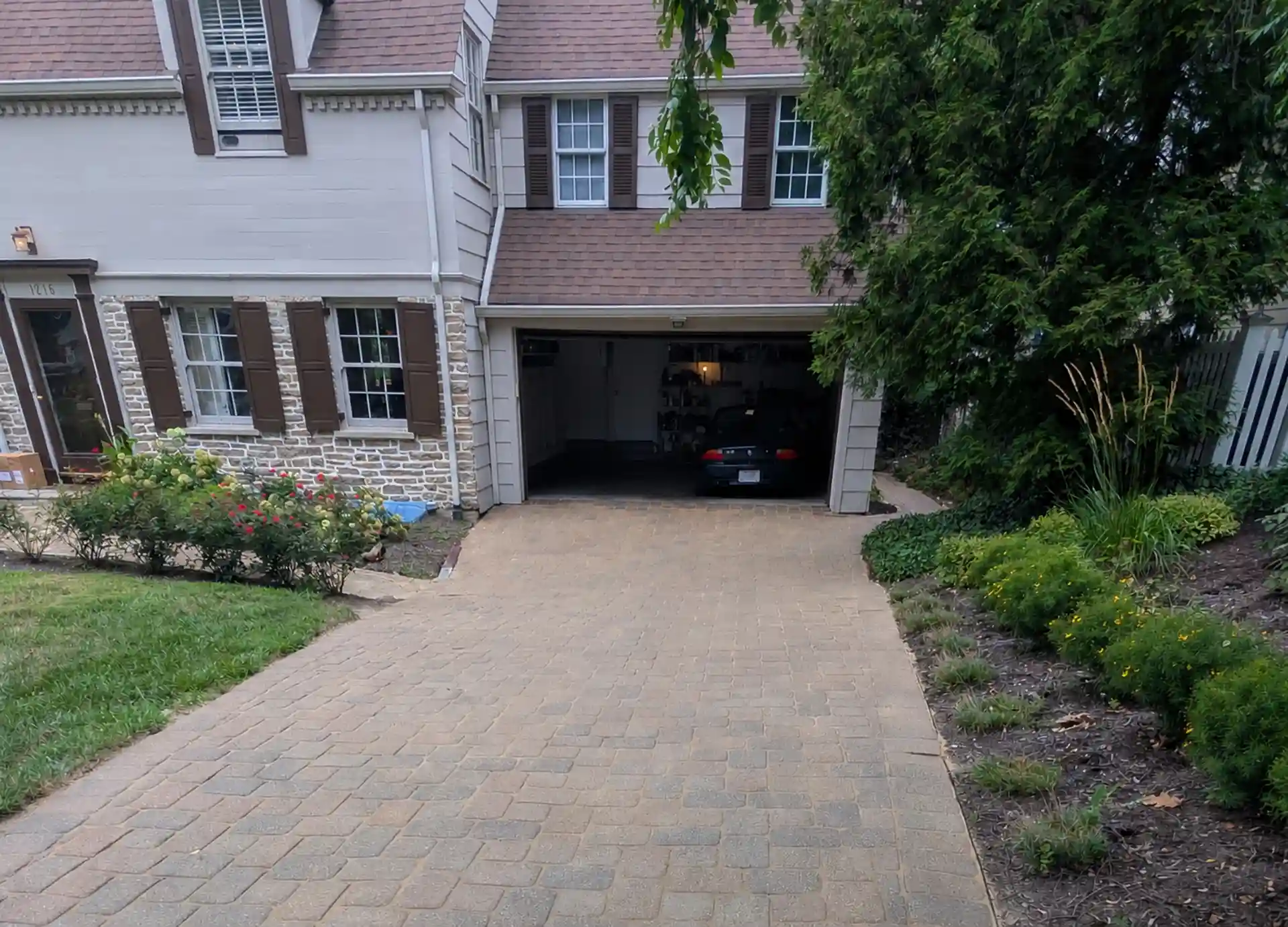
- Paver Restoration: Cleans the hardscape surface, re-stabilizes the joints with polymeric sand, and applies a penetrating sealer. It addresses color fading, joint erosion, and weed intrusion in a single service.
Deck Cleaning: The Foundation of Every Other Service
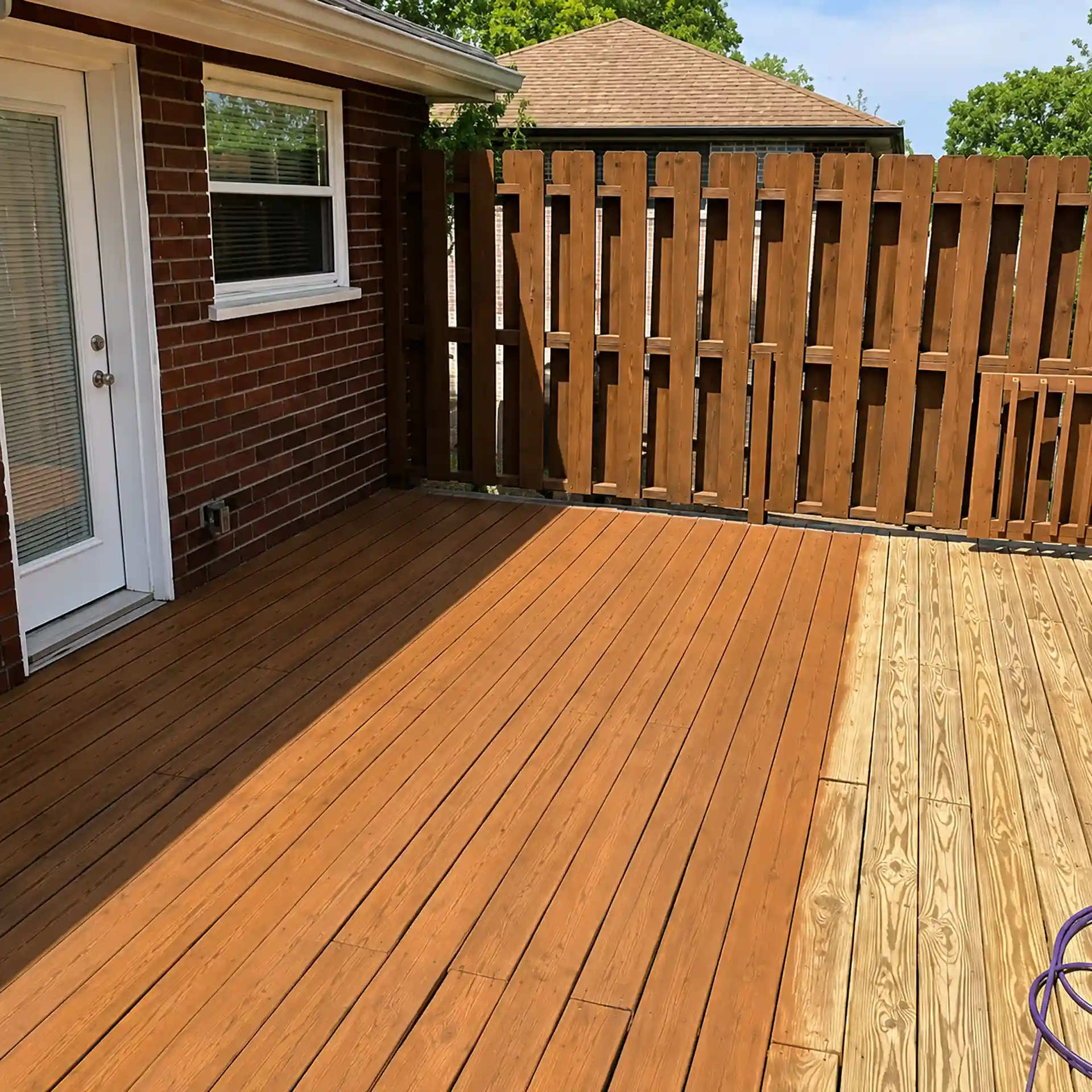
No coating performs as well as it should when applied to an unclean surface. Deck cleaning is not just a cosmetic step. It is a structural preparation that determines how well any coating adheres and performs over time.
What Deck Cleaning Does
A proper deck cleaning does more than rinse away dirt. It removes organic growth, including mildew and algae, that lives in the wood grain. It strips oxidized surface fibers that would otherwise block sealer or stain penetration. After washing, a wood brightener is applied to restore the surface pH and open the wood’s pores for proper coating absorption.
Skipping or shortcutting the cleaning step is the most common reason deck finishes fail early. A coating applied to a contaminated or unbalanced surface will not bond correctly and will peel or fade well ahead of schedule.
When Deck Cleaning Is the Right Call
Cleaning alone is the right call when the existing finish is still performing. If the stain or sealer shows consistent coverage, the deck repels water, and color is still intact, a cleaning is all that is needed. It restores appearance without disturbing a finish that is still doing its job.
Cleaning is also the mandatory first step before any other service. No deck sealing, staining, or paver work should begin on a surface that has not been properly washed, brightened, and dried.
How On Deck Services Does It Differently
On Deck Services uses a controlled cleaning process that avoids the surface damage that comes from high-pressure washing on softer wood species. We apply a wood brightener after every wash to restore natural pH and confirm the surface is ready for whatever coating follows.
Our two-trip production system means cleaning and coating are never done on the same day. The surface gets a dedicated wash visit, dries to an acceptable moisture level, and is verified before the coating visit is scheduled. This is what separates a finish that lasts from one that peels in the first season.
Deck Sealing: Moisture and UV Protection With a Natural Look
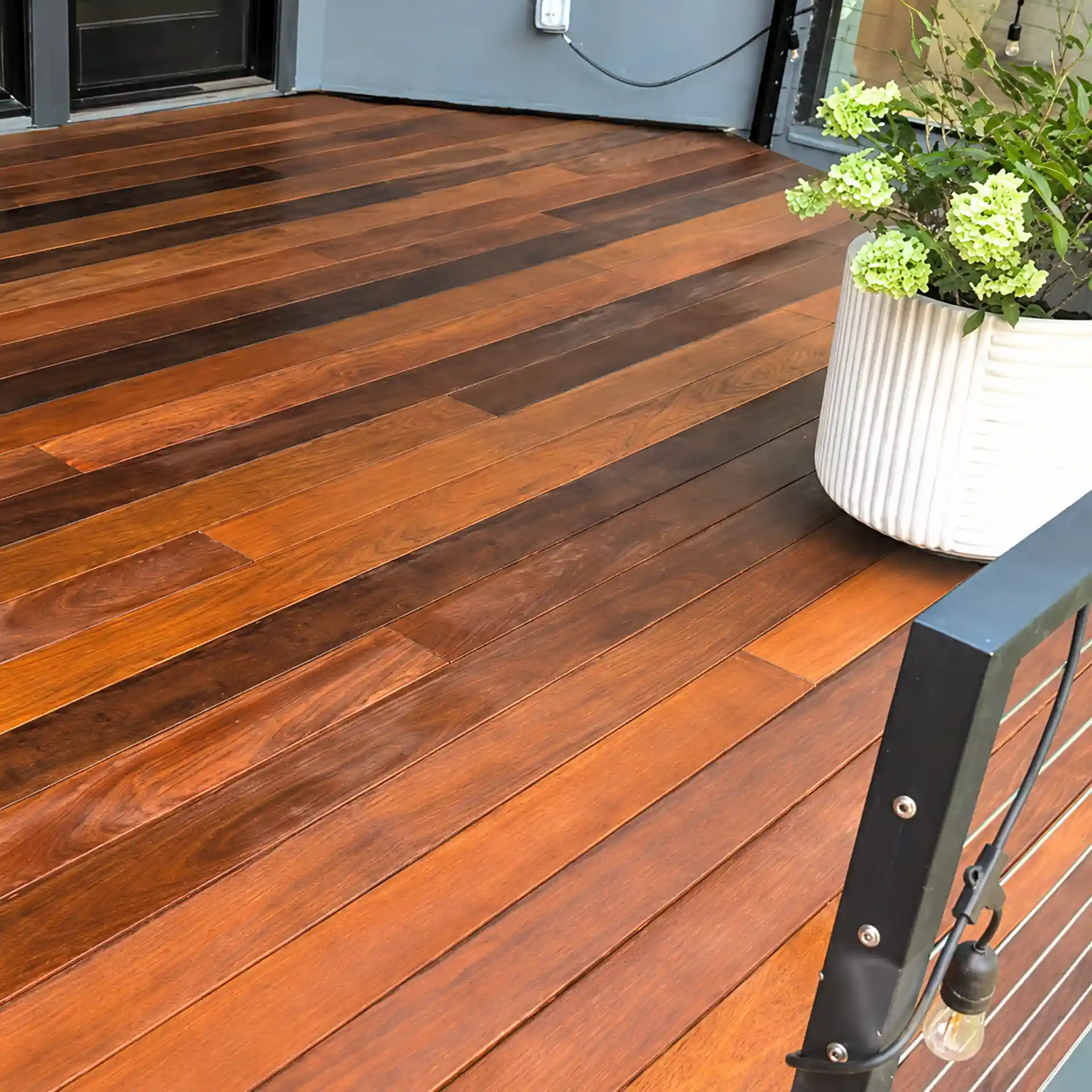
Deck sealing, sometimes called deck waterproofing, is the right choice when protection is the goal and color is not a factor. A sealer penetrates the wood fiber to resist water intrusion and UV degradation without covering the natural grain. The result is a deck that looks like itself, only better protected.
What Deck Sealing Does
A deck sealer, applied correctly, drives moisture resistance into the wood rather than sitting on top of it. This matters in Cincinnati because surface-layer coatings peel under freeze-thaw pressure. A penetrating wood deck sealer expands and contracts with the wood rather than separating from it when temperatures drop. The deck sealer vs stain distinction matters: a sealer protects wood without covering the grain, while a stain adds color and a longer wear layer.
When Deck Sealing Is the Right Call
Deck sealing is right when the wood is structurally sound, and the goal is to protect the natural appearance without adding color. It is also the right maintenance step when a stained deck has been cleaned, and the vertical surfaces need protection without a full re-stain.
A deck that was previously sealed and is starting to look dry or weathered is a good candidate for cleaning and re-sealing. If the finish has failed in patches, the deck needs more than a sealer.
How On Deck Services Approaches Sealing
We use oil-based penetrating sealers on the majority of our projects. These outperform water-based sealers in Cincinnati’s climate because they penetrate more deeply and hold up better under freeze-thaw cycles. The best deck sealer for a Cincinnati property is one matched to the wood species, surface condition, and sun exposure. A universal product recommendation ignores the variables that determine how a sealer performs here.
Every deck sealing project begins with a wash-and-brighten visit. Moisture content is verified before the sealer is applied. This is not an optional step. Applying a sealer over wet wood is a primary cause of adhesion failure.
Deck Staining: Color, UV Protection, and the Longest Wear Cycle
Staining delivers what deck sealing cannot: color. A stain adds pigmentation to the wood, which provides stronger UV resistance and a longer service life than a clear sealer. It is the right choice when the deck needs visible restoration or a fresh appearance.
What Deck Staining Does
A deck stain combines the penetrating moisture protection of a sealer with added pigmentation that resists UV degradation more aggressively. The more pigment in the stain, the more UV protection it provides. A solid stain covers the wood grain entirely for maximum coverage. A semi-transparent stain allows grain to show while adding meaningful color. A transparent stain adds minimal pigmentation and behaves closest to a clear sealer.
Pigmentation also extends the practical wear cycle. A well-applied semi-transparent or solid stain on properly prepared wood typically lasts three to five years before a maintenance coat is needed. A clear sealer on the same surface typically needs attention sooner.
When Deck Staining Is the Right Call
Staining is the right call when the existing finish has failed, or the deck has developed gray, patchy coloration from UV exposure. It is also appropriate when the homeowner wants to change the deck’s appearance or when the previous stain has reached the end of its cycle.
The deck sealer vs stain decision often comes down to one question: does the deck need color? If the answer is yes, staining is correct. If the goal is protection with a natural look, sealing may be sufficient. A deck with widespread coating failure will need more than a sealer, regardless of color preference.
How On Deck Services Approaches Staining
We match stain chemistry to the specific wood species, condition, and sun exposure of each deck. Oil-based penetrating stains are our standard on pressure-treated lumber and hardwood decks because they outperform film-forming products under Cincinnati’s freeze-thaw conditions.
We custom-mix stain colors for every project based on the wood, the home’s exterior, and the homeowner’s preference. Color is mixed and approved before the coating visit begins. Our deck sealing service and staining service both follow the same two-trip production sequence: dedicated wash visit first, coating application second, after moisture verification.
Brick and Paver Restoration: The Hardscape Sibling Service
Paver patios, walkways, and driveways degrade by the same mechanisms that damage wood: UV exposure, moisture intrusion, and organic growth. Paver restoration addresses all three in a single service and is one of the most commonly overlooked maintenance tasks on Cincinnati properties with hardscape surfaces.
What Paver Restoration Does
Paver restoration starts with a full surface cleaning to remove dirt, organic buildup, and surface contaminants. Once clean, the joints between pavers are re-sanded with SEK Joint Stabilizing Sand to reinforce joint integrity and reduce washout. The surface is then sealed with Surebond 8700, an oil-based wet-look sealer that deepens color, resists moisture, and protects against UV damage.
The joint re-sanding step is one that most homeowners do not expect. Unstabilized joints allow weeds, washout, and paver movement. Stabilized joints extend the structural life of the patio system and reduce the frequency of future paver maintenance.
When Paver Restoration Is the Right Call
Paver restoration is the right call when the surface looks dull or stained after washing. Weeds in the joints, sand loss between pavers, and color that has faded in direct sun are all clear indicators. A paver surface that still beads water and shows no joint loss likely needs only a maintenance cleaning.
Ongoing paver maintenance after the initial restoration extends the service life of both the sealer and the joint sand. Neglected pavers that go years without care typically require more intensive prep before re-sealing, which adds cost.
How On Deck Services Approaches Paver Restoration
We use Surebond 8700 on paver patios, walkways, and hardscape surfaces. It is an oil-based penetrating sealer that deepens color without creating a topical film that clouds or peels over time. Joint re-sanding uses SEK Joint Stabilizing Sand. It resists washout, compacts tightly between pavers, and does not attract weed growth the way plain sand does.
We clean paver surfaces before any sealing, using appropriate pressure and chemistry for the specific material. Pavers, stamped concrete, and stream stone each behave differently, and the prep approach is adjusted accordingly.
How to Choose: A Simple Decision Tree
Most homeowners arrive at this question after something changes in their deck’s appearance. The deck-sealing vs. staining question is the most common starting point. These six scenarios cover the most common conditions we encounter in the Cincinnati market.
If the Deck Is Clean but Faded
The deck needs staining. Cleaning will not restore color, and deck sealing will not either. Fading means the pigment in the existing finish has broken down. The only way to restore color is a stain application over a properly prepared surface.
If the Deck Is Dirty but the Color Is Still Good
The deck needs cleaning. If the existing finish is still bonded, repels water, and shows consistent color, the surface does not need a new coating. A thorough wash and brightening restores appearance and keeps the existing finish performing properly.
If the Deck Was Sealed 2-3 Years Ago and Looks Tired
The deck needs cleaning and re-sealing. A sealer applied two to three years ago on a south- or west-facing Cincinnati deck may be near the end of its service window. Cleaning first, then re-sealing with the same or compatible product, restores protection before the wood absorbs damage.
If the Deck Was Stained 3-5 Years Ago and the Color Is Patchy
The deck needs cleaning and re-staining. Patchy color after three to five years is a sign the finish has failed unevenly. In most cases, stripping or sanding the failed coating is necessary before a new stain is applied. Staining over a compromised surface produces uneven absorption and a finish that fails even faster the second time.
If Your Patio or Walkway Looks Dull or Weedy
The surface needs paver restoration. Dull color, weed intrusion at the joints, and visible sand loss all indicate the surface needs more than a cleaning. A full paver restoration cleans the surface, restabilizes the joints, and applies a protective sealer in a single service.
If You Don’t Know
Schedule a free assessment with On Deck Services. A 40-year Cincinnati specialist will look at the surface, identify what it needs, and give you a clear answer in about ten minutes. You will not be sold a service that the surface does not need.
Why Cincinnati’s Climate Affects Every Decision
Cincinnati’s climate creates service timing and product selection decisions that do not exist in more stable climates. Understanding three key factors helps every homeowner make better choices.
Freeze-thaw cycling means that any coating sitting on top of the wood surface, rather than inside it will eventually separate. This is why penetrating products, whether used for deck sealing or staining, consistently outperform film-forming coatings here. The wood expands and contracts with temperature, and the coating needs to move with it.
Summer humidity from the Ohio River Valley affects application timing. Stain or sealer applied in high heat or high humidity will not cure correctly. The ideal Cincinnati application window is spring or early fall, when temperatures are moderate and humidity is manageable.
UV intensity on south- and west-facing surfaces accelerates finish degradation faster than most homeowners expect. A deck facing south may need a maintenance coat one to two years before the same product on a north-facing deck. Service scheduling and product selection both need to account for orientation.
Combining Services in One Project
Most Cincinnati projects involve two or more services in sequence. Combining them in a single project is efficient and ensures each step correctly prepares the surface for the next.
- Cleaning and Sealing: The standard refresh for a deck in good condition with a sealer that has reached the end of its service cycle. Cleaning removes contaminants and opens the wood; deck sealing restores protection.
- Cleaning and Staining: The appropriate combination when color has faded, the existing stain has failed, or the finish is due for full replacement. This combination is typically scheduled every three to five years.
- Cleaning, Staining, and Paver Restoration: The full property refresh for homes with both a deck and a hardscape surface. The deck is cleaned and stained, and the patio, walkway, or driveway is cleaned, re-sanded, and sealed in the same project schedule.
How On Deck Services Approaches Cincinnati Maintenance
On Deck Services has protected decks, fences, pavers, and hardscape surfaces across the greater Cincinnati and Dayton regions since 1985. We operate six in-house crews and carry specialty expertise in Ipe, Mahogany, Massaranduba, and Tigerwood, hardwoods that most contractors in this market avoid.
Every project follows the same diagnostic-first process. We assess the surface before recommending any service. Our deck sealing service and staining programs follow the same sequence. The recommendation is based on observed surface conditions, not on what is most profitable to sell.
We back every project with a written one-year workmanship warranty. For homeowners who want ongoing management after restoration, we offer DeckShield for wood surfaces. IPE Reserve serves the same function for exotic hardwood decks.
Contact On Deck Services to schedule a free on-site assessment. We assess your deck, paver surface, or hardscape structure at no charge and give you a clear service recommendation. A written quote follows before any work begins.
Service Selection FAQs
Should I seal or stain my deck in Cincinnati?
Should I seal or stain my deck is the question we answer most often during assessments. If the existing finish has failed, color has faded, or you want a different look, staining is the right choice. If the wood is in good condition and you want to preserve the natural appearance without adding color, deck sealing is appropriate.
Can I get the deck cleaned without sealing or staining afterward?
Yes. If the existing finish is still performing correctly, cleaning alone is the right service. A deck with consistent coverage, good water repellency, and no active coating failure does not need a new product applied.
How long after cleaning can my deck be sealed or stained?
Most penetrating oil-based products require wood moisture content at or below 15 percent before application. Depending on weather conditions and the wood species, this typically means waiting 48 to 72 hours after cleaning. On Deck Services verifies moisture content before scheduling the coating visit, so that check is built into the process.
Do you paint decks?
On Deck Services applies solid-color stains that provide full coverage, similar to paint, but with better wood penetration and flexibility. Traditional exterior paint is not recommended for horizontal surfaces because it sits on top of the wood and peels under foot traffic and weather exposure. Solid stains provide the same uniform color result without those adhesion risks.
Does paver restoration include the joints between pavers?
Yes. Joint re-sanding with SEK Joint Stabilizing Sand is included in every paver restoration at On Deck Services. Old sand is replaced with a stabilized product that resists washout and weed intrusion, and the surface is sealed once the joints are reinstated.
How often should a Cincinnati deck be cleaned and resealed?
A deck with an oil-based penetrating sealer typically needs cleaning every 1 to 2 years and re-sealing every 2 to 3 years. South- and west-facing decks in direct sun reach the end of the sealer’s service window faster than shaded surfaces. On Deck Services’ DeckShield membership manages this schedule proactively so you do not have to track it yourself.
Can I combine deck and paver services in one project?
Yes. On Deck Services regularly completes deck cleaning and staining, along with paver restoration, as part of a single project schedule. Combining services is efficient and ensures the prep standards for each surface are maintained correctly throughout the project.
Will sealing change the color of my deck?
It depends on the wood deck sealer being used. The best deck sealer for most Cincinnati surfaces is an oil-based penetrating product that slightly deepens the natural color without adding significant pigmentation. Clear water-based sealers are more color-neutral but typically provide less protection in Cincinnati’s freeze-thaw climate.