

On Deck Services delivers deck staining across the Cincinnati and Dayton regions, backed by nearly four decades of experience on every project. This post covers what to ask, what to verify, and what to avoid before you sign a contract with any deck staining contractor in Cincinnati. The climate here is specific, and a contractor who understands it will show that in the first conversation.
Cincinnati’s outdoor climate is one of the more demanding in the Midwest for wood surfaces. Freeze-thaw cycling, summer humidity from the Ohio River Valley, and intense UV exposure on south- and west-facing decks all stress a poorly applied finish. The result is a stain job that looks fine in May but cracks and peels before the following spring. On Deck Services has delivered professional deck staining across the greater Cincinnati and Dayton regions since 1985. We have seen what happens when prep is skipped and the wrong chemistry is applied to the wrong wood. We have also watched verbal warranties disappear the moment a homeowner called to report a problem. The framework in this post reflects nearly four decades of work on Cincinnati decks specifically.
Why Cincinnati Decks Are Hard on Deck Stain
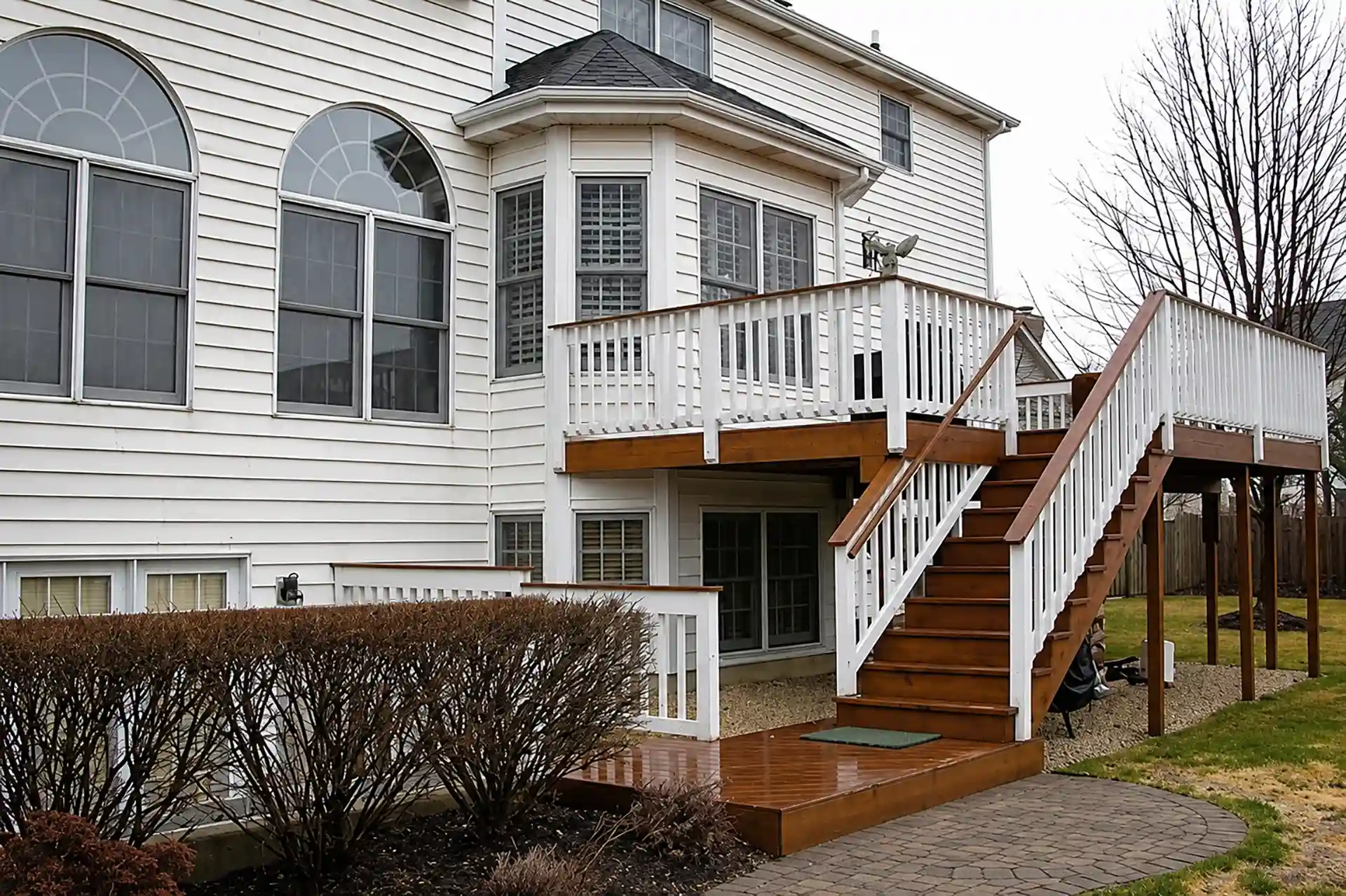
Cincinnati’s climate creates year-round stress on outdoor wood. The region cycles through conditions that attack a deck finish from multiple directions. Understanding this context helps you evaluate whether a contractor knows your specific market.
Freeze-Thaw Cycling
Cincinnati winters produce repeated freeze-thaw cycles that expand and contract wood fibers with each temperature swing. Water penetrates any crack or porous spot in the finish, then freezes and pushes outward. This is one of the primary reasons deck stain fails here faster than in drier climates.
A contractor who understands Cincinnati weather will address moisture sealing and surface preparation with this in mind. One who applies the product without considering freeze-thaw behavior is setting themselves up for early failure.
Summer Humidity (Ohio River Valley)
High humidity during Ohio summers creates problems at the application stage and throughout the finish’s life. Stain applied in elevated moisture conditions, whether in the wood or the ambient air, will not cure properly. Trapped moisture causes adhesion failure, bubbling, and premature peeling.
A qualified deck-staining contractor verifies the wood’s moisture content before applying any finish. Skipping this step costs you the full service life of the job.
UV Intensity on South- and West-Facing Exposures
South- and west-facing decks receive significantly more direct sun than those facing north or east. UV exposure bleaches pigment, dries out wood fibers, and considerably shortens the recoat window. A contractor quoting the same product and schedule for every deck, regardless of orientation, is ignoring an important variable.
Stain selection and application method should reflect the actual sun load a deck carries. On Deck Services factors orientation into every project assessment.
Cincinnati Wood Conditions
Pressure-treated lumber is the most common deck material in the Cincinnati market. It requires a specific moisture window before it properly accepts the stain. New pressure-treated lumber can retain too much moisture for months, and staining too early can lead to adhesion failure.
Older pressure-treated wood often has oxidized surface fibers that block penetration entirely without proper prep. These are not edge cases. They are the standard conditions that a Cincinnati deck-staining contractor should know how to address.
The Five Things That Decide Whether a Stain Job Lasts
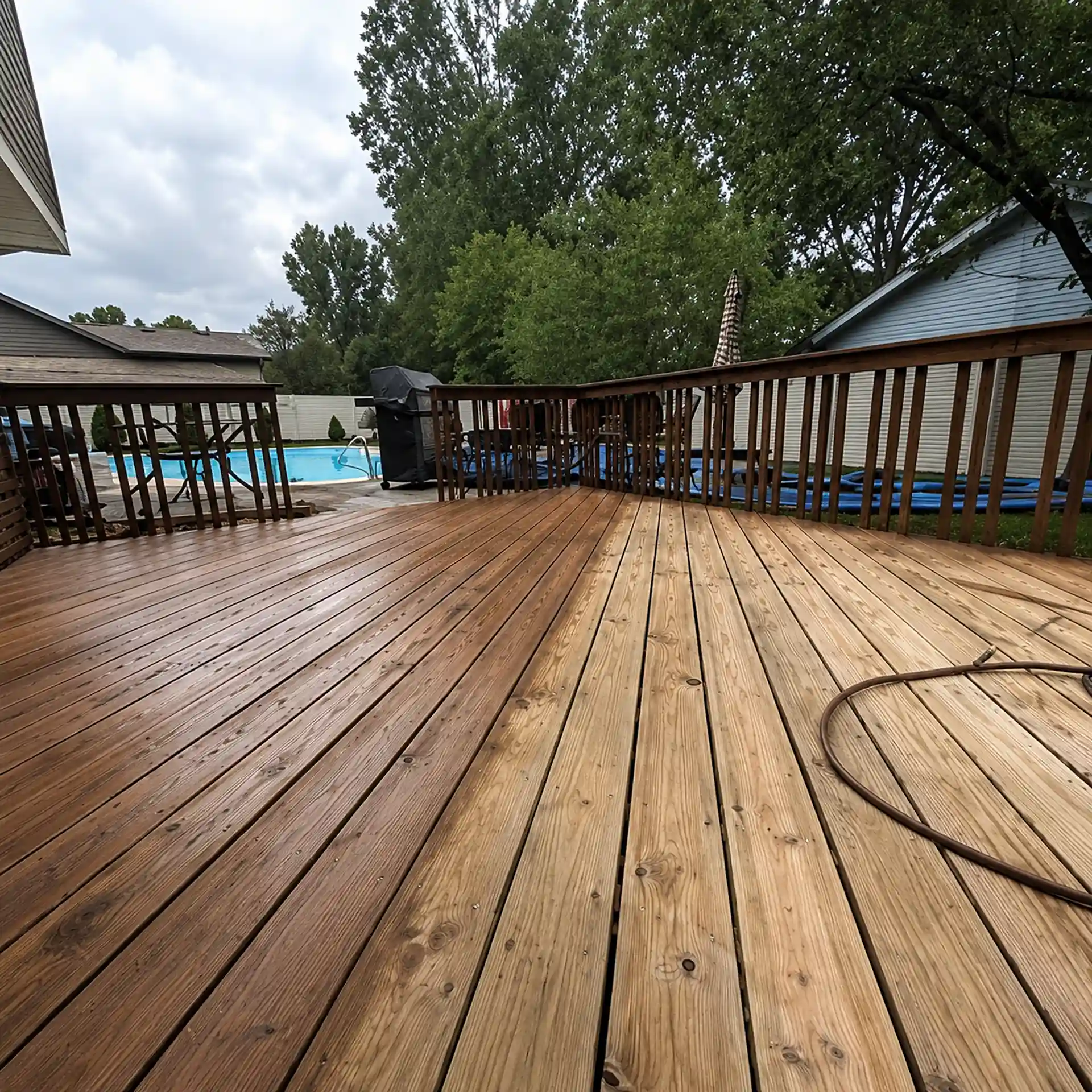
Most stain failures trace back to one of five variables. Understanding them helps you ask sharper questions and identify contractors who know the work.
Prep Quality (The #1 Factor)
Prep is the single biggest variable in whether a stain job performs or fails. The wood surface needs to be clean, free of oxidation, chemically balanced, and dry before any product is applied. No stain quality compensates for skipped or insufficient prep.
Proper prep is more than rinsing a deck with a pressure washer. It includes the right cleaning chemistry, a brightening step to restore wood pH, and adequate dry time before staining begins.
Stain Chemistry
Not all stain products perform the same way in Cincinnati conditions. Oil-based penetrating stains typically outperform water-based film-formers on pressure-treated and hardwood decks. They penetrate the wood fiber rather than sitting on top of it, which matters significantly under freeze-thaw stress.
Film-forming products are more prone to peeling in cold-weather climates. The right chemistry depends on the wood species, the deck’s current surface condition, and its sun and moisture exposure.
Cleaning Chemistry
The cleaning step uses chemicals that either help or harm the wood. Bleach-based cleaners remove surface discoloration but can damage wood fiber over time and leave residue that interferes with stain adhesion. Phosphate-based systems clean aggressively but can raise grain too dramatically.
A contractor who applies a wood brightener after the wash restores the wood’s natural pH. This step improves stain adhesion and helps the finish reach closer to its rated service life.
Application Method and Conditions
Stain applied in direct sunlight, during high heat, or with excessive ambient humidity will not perform as designed. The ideal application window requires moderate temperatures, low humidity, and no rain in the forecast for at least 48 to 72 hours.
Application method also matters. Back-brushing or rolling forces stain into the wood rather than simply coating the surface. A contractor who only sprays without working the product in may leave you with surface-only coverage that weathers quickly.
Maintenance Cadence
Even a well-applied stain job needs maintenance to reach its full service life. Horizontal surfaces, including deck boards and top rails, take the most wear and need attention before the coating fails. Waiting until you see peeling or graying means wood fiber has already been lost.
A contractor who provides a clear maintenance schedule is thinking about your deck’s long-term performance. On Deck Services offers DeckShield, a structured annual maintenance membership that manages this process so you do not have to track it yourself.
12 Questions to Ask Before You Sign a Cincinnati Deck Staining Contract
When you search for deck stainers near Cincinnati, the volume of options can be difficult to evaluate. These 12 questions help you distinguish qualified deck-staining contractors from those who are not.
- Years in the Local Market: Ask how many years they have been staining decks in the Cincinnati or Dayton area. Experience in other regions does not translate directly to Cincinnati’s climate.
- Cleaning Chemistry Used: Ask whether they use phosphates, bleach, or acid in their cleaning process. A qualified contractor will explain what they use and why, and will know how it affects the wood.
- Moisture Verification Process: Ask how they verify wood moisture content before staining. This is a non-negotiable step for proper adhesion, and a contractor who does not check it is skipping a foundational requirement.
- Stain Chemistry Recommendation: Ask what stain chemistry they recommend for your specific wood type and sun exposure. A generic answer that does not account for your deck’s conditions is a warning sign.
- Prior Finish Handling: Ask whether they strip the prior finish or stain over the existing coat. The right answer depends on the current surface condition, and a contractor should explain their reasoning clearly.
- Timeline from Cleaning to Final Coat: Ask about the typical timeline between cleaning and the final stain application. This reveals whether they allow adequate dry time or are moving too fast.
- Warranty Coverage: Ask specifically what the warranty covers and for how long. A written workmanship warranty from a deck staining contractor carries real weight; a verbal promise does not.
- Insurance Coverage: Ask whether they carry general liability and workers’ compensation. A contractor without both puts you at financial risk if something goes wrong on your property.
- BBB Standing: Ask whether they are BBB-rated or accredited. It is not the only credential that matters, but it is a clear indicator of business stability and accountability.
- Local References: Ask for Cincinnati or Dayton references from the last twelve months. Regional references matter because they speak directly to the contractor’s work in your specific market.
- Weather Protocol: Ask what their protocol is when the weather changes mid-project. A contractor without a clear answer has not thought through one of the most common complications in this trade.
- Prep Step Details: Ask what their prep step includes, line by line. Washing, stripping, brightening, sanding, and moisture verification are each distinct steps. A vague answer here is a significant red flag.
Cincinnati-Area Red Flags
Some warning signs are particular to this market. Recognizing them early can save you significant money and frustration.
- Storm-Chasing Door-Knockers: Be cautious of contractors who appear after a storm to offer discounted work. This pattern is common in the Cincinnati market and often involves crews without established local track records.
- Cash-Only Deposit Requirements: A legitimate deck staining service accepts standard payment methods and provides a written contract before work begins. Cash-only arrangements make it nearly impossible to dispute a bad outcome.
- Verbal-Only Warranties: A warranty that is not in writing is not a warranty. Ask for the warranty terms documented in the contract before you sign anything.
- Same-Day Stain Over an Existing Deck: Skipping prep and staining directly over the existing finish is the most common shortcut in this trade. It will appear acceptable for a short period and then fail. Any contractor pitching this approach should not be on your list.
- Quotes That Omit Product Details: A legitimate quote will specify the stain product brand and chemistry. A quote that only says “stain” either hides what they use or indicates they have not decided.
- Pressure-Closing Tactics: A contractor who pushes you to sign on the spot or creates artificial urgency is not operating from confidence in their work. Take the time to compare your options properly.
Credentials That Matter in Cincinnati
A few credentials are worth verifying directly when evaluating any deck stain contractor in the Cincinnati market. Each item here helps distinguish established deck staining contractors from those operating without accountability.
- BBB-Rated Business with a Local Address: A BBB-rated contractor with a stable Cincinnati or Dayton address has a local reputation to protect and an established record you can review.
- Verified-Review Platform Presence: Presence on Google, HomeAdvisor, or similar platforms with a meaningful volume of verified local reviews gives you a track record you can evaluate independently. A contractor with no local reviews is an unknown quantity.
- Manufacturer-Recognized Credentials: Some stain manufacturers offer recognized credentials for contractors who complete product training. This is not universal, but it signals investment in product-specific knowledge.
- Verifiable Local References: References from Cincinnati or Dayton homeowners you can contact by phone or visit provide direct evidence of the contractor’s work in this market. References from outside the region carry less weight here.
- Years in the Cincinnati or Dayton Market: Length of time in this specific region matters. A contractor who has been working Cincinnati decks for decades has seen the full range of conditions and outcomes this climate produces.
How to Compare Two Cincinnati Staining Quotes
Getting two quotes is a starting point. Evaluating what each deck-staining service includes requires looking beyond the final price. Deck staining costs are among the most common points of confusion when comparing bids.
Prep Spec
The prep step is the most important line item in any staining quote. Ask what it specifically includes: stripping of the prior finish, surface cleaning, brightening, sanding, and dry-down verification before stain is applied. Two quotes at identical prices can represent entirely different outcomes depending on what prep is included.
Stain Product
The quote should name the specific product brand, the stain chemistry, and the projected recoat cycle. A quote that only lists “stain” tells you very little. The product determines how the finish holds up in Cincinnati conditions and how often it will need maintenance.
Number of Coats
Horizontal surfaces, such as deck boards, are most exposed and subject to wear. One coat on a horizontal surface typically does not hold up as well as two, particularly under direct sunlight. Verify how many coats are included specifically for horizontal surfaces.
Warranty
Compare warranty terms side by side. Note the length, whether it covers workmanship and materials, and whether it is written into the contract. A one-year written workmanship warranty is a reasonable minimum. Verbal commitments should not factor into the comparison.
Schedule
A realistic schedule accounts for the weather. A contractor who provides a fixed date without any weather contingency is either not taking application conditions seriously or is overcommitting. The quote should include a realistic service window, not just a single date.
How On Deck Services Approaches Deck Staining in the Greater Cincinnati Area
On Deck Services has been protecting decks in the Cincinnati, Dayton, and Northern Kentucky regions since 1985. We handle everything from routine professional deck staining to full deck refinishing for surfaces neglected for years. The standard has never changed: diagnose the surface correctly, prepare it thoroughly, and apply the right product under the right conditions.
We start every project with an on-site assessment before recommending any package or product. We evaluate the surface condition, the wood species, the existing coating history, and the deck’s orientation and exposure. That information drives the recommendation. A one-size-fits-all pricing structure cannot account for the range of conditions Cincinnati decks present.
Our two-trip production system separates cleaning and staining into distinct visits. The first trip covers washing and prep. The second trip applies stain after the surface has had adequate drying time. We verify moisture content before committing to the stain visit. Applying finish to wet wood is one of the most common causes of early failure, and it is entirely avoidable.
We use oil-based penetrating stains on the majority of our projects because they outperform film-forming products under Cincinnati’s freeze-thaw conditions. Stain colors are custom-mixed based on your wood type, your home, and your preferences. Every project is backed by a written one-year workmanship warranty.
For homeowners who want ongoing protection after the initial work is complete, we offer DeckShield. It is a structured annual maintenance membership that manages the schedule, monitors the deck’s condition, and performs preventative work before visible failure occurs.
If you are looking for deck stainers near Cincinnati or Dayton, On Deck Services offers a free, no-commitment on-site assessment. We look at your surface, tell you honestly what it needs, and provide a written quote before any work begins. Contact us to schedule your assessment.
Deck Staining FAQs
How long should a deck stain last in Cincinnati?
A well-applied stain on a properly prepared surface typically lasts three to five years on horizontal surfaces in Cincinnati’s climate. South- and west-facing decks under direct sun will fall toward the shorter end of that range. Proper prep and the right stain chemistry are the two most important factors in achieving the full service window.
What’s the best time of year to stain a deck in Cincinnati?
Spring and early fall are the most reliable windows for deck staining in Cincinnati. Temperatures between 50 and 85 degrees Fahrenheit work well, along with low humidity and no rain expected for 48 to 72 hours after application. Midsummer heat and winter temperatures both fall outside the appropriate range for most stain products.
How can I tell if my Cincinnati deck staining contractor is using harsh chemicals?
Ask them directly what cleaning chemistry they use and whether they apply a wood brightener after washing. A contractor who uses a wood brightener after cleaning is taking surface pH seriously. If they cannot explain their cleaning process or hesitate to name the specific products, that is a concern worth noting.
Do I need to strip the old stain before applying a new coat?
It depends on the condition of the existing finish. If the old stain remains evenly bonded with no active peeling or widespread failure, a maintenance coat may be appropriate. If the coating has failed in patches, is peeling, or has multiple layers of buildup, stripping or mechanical sanding is necessary. Without that prep, no new product will adhere properly.
What’s the difference between deck cleaning and deck staining?
Deck cleaning removes surface dirt, mildew, oxidized wood fibers, and contaminants from the wood. Deck staining applies a protective and decorative finish to the cleaned and prepared surface. Cleaning alone does not protect the wood from UV or moisture damage. Staining over an improperly prepared surface leads to premature failure.
How much does professional deck staining cost in Cincinnati?
Deck staining costs in Cincinnati vary based on deck size, surface condition, wood type, stain chemistry, and the required prep level. On Deck Services’ pricing starts at around $6 per square foot for a maintenance coat on a deck in good condition. Full-deck refinishing on a heavily weathered surface costs $15-$20 per square foot. An accurate quote requires an on-site assessment.
Can a deck be stained in winter in Cincinnati?
Most stain products require application temperatures above 50 degrees Fahrenheit, and Cincinnati winters regularly fall below that threshold. Cold temperatures slow cure time and can cause adhesion failure in certain finishes. Late fall and early spring are generally the last and first viable windows for deck staining in Cincinnati each year.
How do I verify a Cincinnati deck staining contractor’s credentials?
Check their BBB rating, ask for local references from the last twelve months, and confirm they carry general liability and workers’ compensation insurance. Ask them to specify the stain product brand and chemistry in your written quote. A legitimate deck-stain contractor will have no hesitation in providing any of that information.